
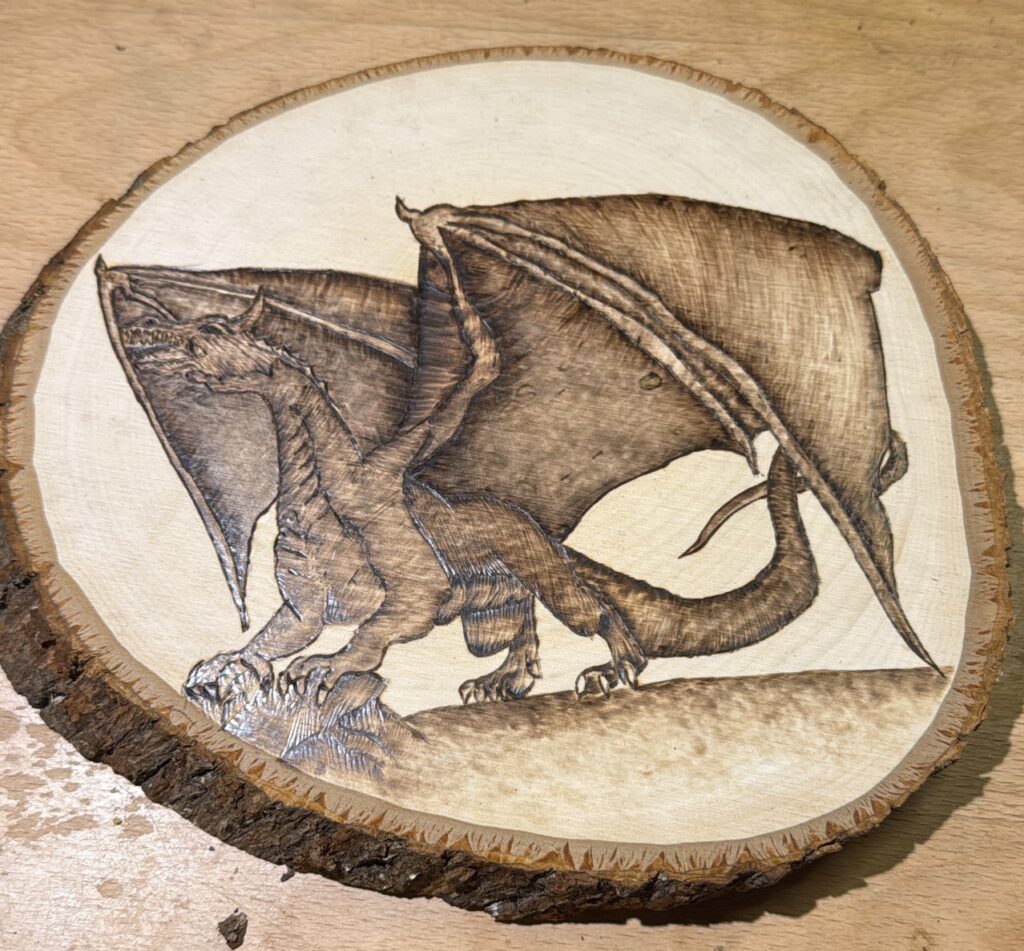
Shading is where pyrography moves from “nice outline” to “holy wow, that has depth.” It’s the soul of dimension. The mood-maker. The subtle force that convinces your eyes that the wood has shape, texture, weight, and temperature.
If line work creates the structure and pointillism adds detail, shading is the cinematic lighting that makes your piece feel alive.
Without good shading, pyrography looks flat and unfinished.
With good shading, even the simplest design becomes rich, atmospheric, and expressive.
Let’s turn your shading from “accidental scorch marks” into intentional artistry.
What Makes Shading in Pyrography Unique?
Unlike drawing or painting, shading in pyrography isn’t about graphite or pigment. It’s about heat, pressure, and movement. You’re literally painting with temperature.
Every subtle shift in:
- how long your pen stays in contact
- how hot your burner is
- the angle of your stroke
- the softness of your pressure
…creates a difference in tonal value.
This means shading is part technique, part intuition, part muscle memory — and part emotional regulation when you accidentally go too dark. (It happens. Deep breath.)
Three Core Elements of Great Shading
Master these and you instantly elevate your work:
1. Heat Control
Low heat gives soft, subtle tones.
High heat gives dark, bold shading, but also more risk.
Pro tip: Start cooler than you think you need. You can always build darker. You cannot unburn wood.
2. Pressure Control
The more pressure you apply, the more the wood fibers compress and scorch. Light pressure = airy shading. Heavy pressure = strong impact.
3. Layering
Shading works best in layers. Build value slowly. Think watercolor, not acrylic.
Shading Techniques to Practice
1. Smooth Gradient Shading
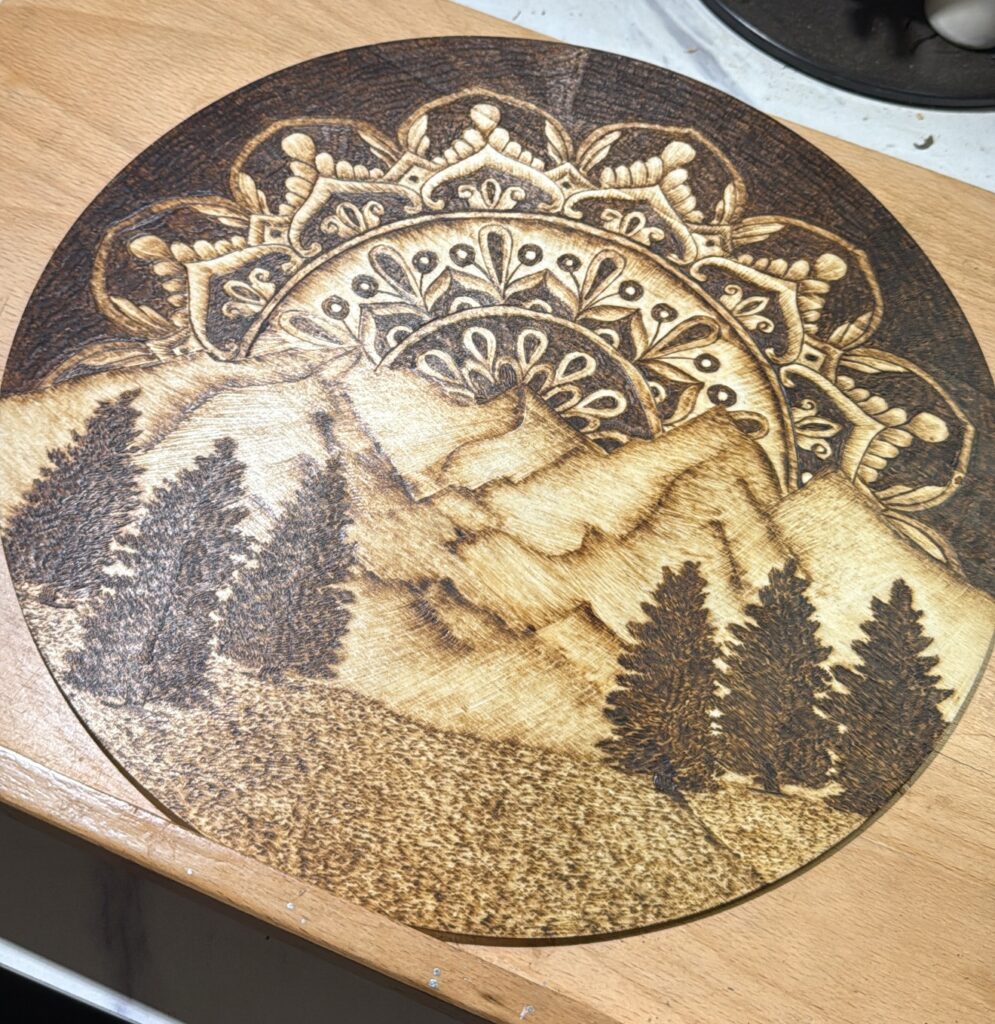
This is your bread and butter, a gentle shift from light to dark.
Practice on:
- spheres
- petals
- feathers
- clouds
- mountains
Smooth gradients teach patience, control, and movement.
2. Directional Shading
Your shading lines should follow the form of the object, not fight it.
For example:
- Shade around the curve of a leaf.
- Shade along feather shafts.
- Shade outward from a flower center.
Directional shading makes objects look dimensional, not stamped.
3. Layered Value Shading
Build medium tones first, then deepen shadows gradually.
This avoids blotches and burnt edges.
4. Textural Shading
Use shading to create tactile effects:
- bark depth
- fur variations
- stone cracks
- soft petals
- weathered surfaces
Texture + shading = magic.
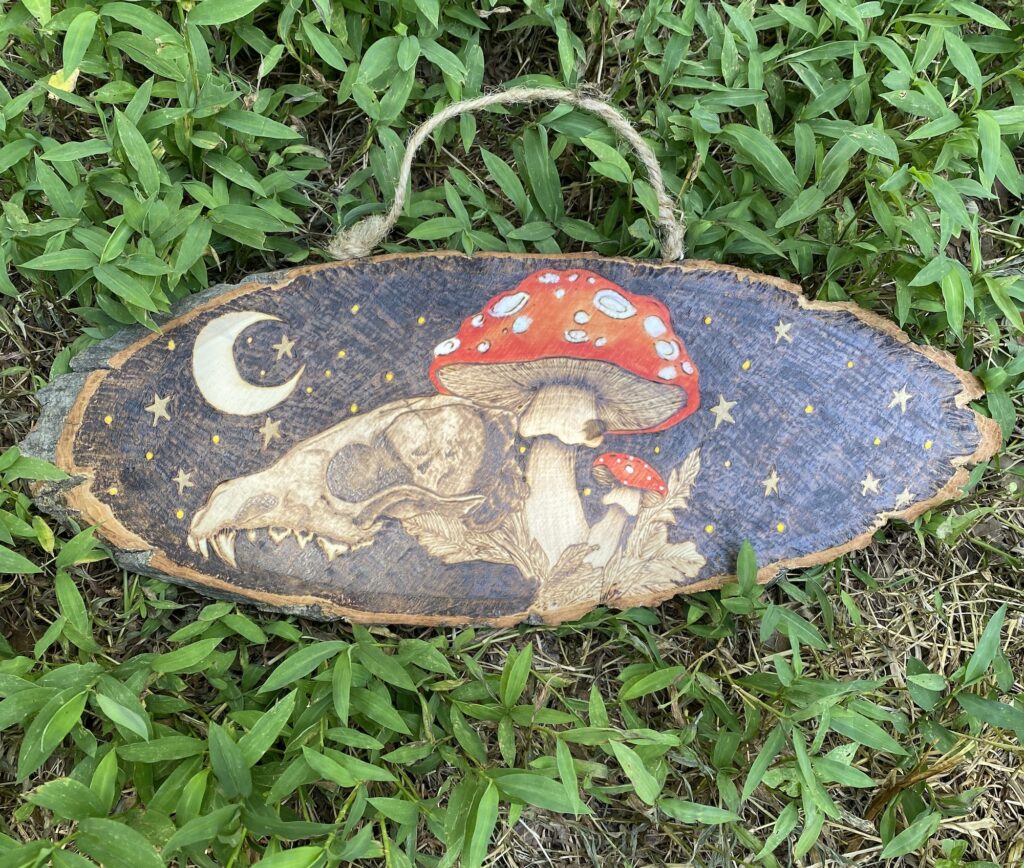
Common Shading Struggles (And How to Fix Them)
Problem 1: Patchy or Streaky Shading
Your strokes are too slow or your heat is too high.
Fix:
Lower heat. Move your hand smoothly without hovering.
Problem 2: Harsh Edges
When dark areas end abruptly, it looks unnatural.
Fix:
Feather your shading outward with lighter strokes.
Problem 3: Overburned Spots
You stayed in one place too long.
Fix:
Keep your pen moving, think “glide,” not “park.”
Problem 4: Muddy Midtones
If everything is medium-dark, nothing stands out.
Fix:
Reintroduce highlights. Let wood breathe.
Exercises to Build Shading Skill Fast
1. The Classic Sphere
Burn a perfect sphere with a light source.
It teaches:
- shadow shape
- highlight placement
- smooth gradients
- form
2. Shaded Leaf Study
Practice shading along natural contours.
3. Feather Shading Exercise
Light, layered shading creates softness.
4. Mountain Range Gradients
Perfect for learning atmospheric depth.
5. Value Squares
Burn three squares:
- light
- medium
- dark
Make each square consistent. This one builds discipline like nothing else.
How Shading Changes Your Entire Pyrography Practice
Good shading doesn’t just make your pieces prettier. It makes you more confident in every aspect of your work. Your compositions improve. Your subjects gain dimension. Your storytelling becomes more vivid.
Shading is emotional. It sets tone. It communicates what matters.
Once you master it, your creative voice becomes unmistakable.